

 Back
Back
Key Takeaways
- The UAE–India relationship is moving beyond trade and individual investment flows towards an increasingly institutionalised economic corridor. The India–UAE Comprehensive Economic Partnership Agreement (CEPA), the 2024 Bilateral Investment Treaty, INR–AED settlement arrangements, GIFT City connectivity and new digital and logistics infrastructure are creating stronger rails for capital and commerce between the two markets.
- Recent geopolitical and supply-chain disruptions have moved resilience from a policy concept into an investment criterion. That single shift is what makes the UAE–India relationship worth watching now—not simply as a trade story, but as an emerging model for how capital, production and logistics may be organised in a more fragmented global economy.
- UAE capital may also carry a differentiated advantage for India: patient capital, infrastructure and logistics capabilities, energy expertise, government-to-government connectivity, longstanding business networks and the UAE's position as a gateway to the Middle East and Africa. In the right transaction, a UAE investor can be a strategic partner in scaling an Indian business beyond India, rather than simply a source of financing.
- The next phase of the corridor is likely to be defined less by individual UAE investments in India and more by what the two economies build together: investment platforms, supply chains, energy and digital infrastructure, and routes serving markets across the Middle East, Africa, Eurasia and Europe.The result is a corridor that is increasingly capable of supporting not merely bilateral trade or one-off The emerging opportunity is therefore not limited to bilateral trade or one-off investments. It lies in building platforms that connect capital, production, technology, logistics and access to third markets.
1. From commercial familiarity to strategic alignment

The UAE and India have long had a high degree of commercial familiarity. Nearly 4.3 million Indians live in the UAE, while Indian entrepreneurs, banks and professional firms have for decades used the Emirates as a base for regional expansion. For investors, the significance of this relationship lies less in demographics than in the commercial connectivity and relationship infrastructure that can reduce friction in building and operating cross-border businesses.
The UAE–India relationship is now extending beyond trade and diaspora into areas including long-term capital, economic diversification, energy transition, food security, technology, infrastructure and supply-chain resilience.
CEPA, which entered into force in May 2022, has strengthened the institutional framework for bilateral commerce. Bilateral trade reached approximately US$100 billion in FY2024–25 and, in January 2026, the two governments set a new target of US$200 billion by 2032.
CEPA is now one component of a broader framework. The new India–UAE Bilateral Investment Treaty, signed in February 2024 and in force since 31 August 2024, adds an institutional layer for two-way investment. Separately, the Reserve Bank of India and the Central Bank of the UAE established a framework in July 2023 for the use of INR and AED in cross-border transactions. The strategic significance of the relationship is therefore better understood through the institutional infrastructure now being built around capital and commerce, including in new areas such as aerospace & defence.
This institutional deepening coincides with a strong alignment in economic priorities. India requires substantial capital and execution capability for infrastructure development, urbanisation, clean energy, manufacturing, digitalisation and healthcare. The UAE, meanwhile, is pursuing its own economic diversification agenda while strengthening its position as a global capital, trade, logistics and innovation hub. Both countries are focused on supply-chain resilience, energy security, food systems and access to future-facing technologies.
The overlap is significant because several of India’s largest capital requirements areas are in sectors where UAE investors and strategic corporates already possess substantial capital, operating capability or sector expertise.
That said, institutional frameworks do not automatically translate into frictionless execution. CEPA's concessions were designed to pull commerce towards manufacturing and services, but customs, tariff and quota systems take longer to adapt than the agreements that establish them. Recent adjustments to duties on gold and silver illustrate the continuing need to align policy implementation with the broader objectives of the corridor.
For UAE investors, India is therefore not a single macroeconomic allocation. It is a market where capital can be deployed through infrastructure platforms, strategic corporate partnerships, private equity, credit, real estate, energy assets, technology businesses, funds and listed investment vehicles.
For Indian companies, the UAE offers a sophisticated regional base, access to capital and strategic partnerships, and a route to markets across the Middle East, Africa and beyond. The opportunity should therefore not be viewed solely through the lens of “UAE capital into India”. Indian manufacturing, technology or services capabilities can be combined with UAE financing, logistics and distribution to build regional businesses serving markets beyond either country.
2. From geographic diversification to resilient operating platforms

Recent disruptions across maritime routes, energy markets and global supply chains have sharpened the commercial value of resilience.
The lesson is less about any individual conflict than about the cost of concentration. Freight and insurance costs, input availability and logistics reliability can change rapidly even where the underlying investment or business has no direct exposure to a conflict.
The commercial implication is to build multiple sourcing, production, logistics and financing nodes that give businesses greater optionality when one part of the network is disrupted. India and the UAE can increasingly function as complementary nodes within such an architecture. A UAE investor, for example, could back an Indian manufacturing or food-processing platform serving India’s domestic market while using the UAE as a financing, logistics and distribution base for the wider Middle East and Africa. The investment case then extends beyond exposure to Indian domestic growth: it becomes the creation of a wider regional platform.
The UAE's OPEC exit sharpens this further. ADNOC is expanding towards 5 million barrels per day, and has moved to deepen ties with India. In May 2026, ISPRL and ADNOC agreed to explore expanding ADNOC's crude storage in India's strategic reserves from roughly 6 million to as much as 30 million barrels, alongside potential crude storage in Fujairah.
Other elements of the infrastructure for multi-market platforms are also emerging. Bharat Mart at Jebel Ali is intended to give Indian MSMEs access to buyers across the Middle East, Africa and Eurasia. The January 2026 India–UAE joint statement linked Bharat Mart with the Virtual Trade Corridor and Bharat-Africa Setu as mechanisms for taking MSME products into wider regional markets.
The two governments have also signed a bilateral Inter-Governmental Framework Agreement on the India–Middle East–Europe Economic Corridor (IMEC). IMEC remains a longer-term project, but it reinforces the broader direction of travel: the UAE–India relationship is being positioned within a wider connectivity architecture rather than as an isolated bilateral corridor.
In May 2026, another component of that architecture became operational when India and the UAE launched the Virtual Trade Corridor using the MAITRI digital framework, connecting customs and port authorities with the objective of reducing cargo costs and transit times.
The proposition, therefore, is not that geopolitical uncertainty automatically redirect UAE capital to India. It is that a more fragmented global economy increases the value of durable commercial networks and multiple operating nodes, and the India-UAE corridor is one of the few relationships building that architecture in real time.
3. From individual investments to repeatable India capability
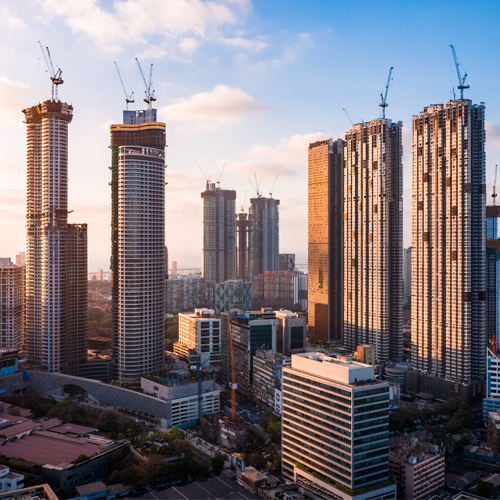
India’s structural capital requirements remain substantial, particularly across infrastructure, energy, logistics, manufacturing and digital systems. For established UAE investors, however, the more interesting question may increasingly be not whether to invest in India, but whether to build an India investment capability.
There is an important distinction. A one-off allocation can be evaluated transaction by transaction. Repeated investment in a market as large and complex as India benefits from accumulated institutional knowledge: trusted local partners, sector expertise, governance frameworks, regulatory experience, on-the-ground teams and the ability to identify and execute opportunities more efficiently.
The form of deployment will vary depending on an investor’s preferred level of control, risk and liquidity, but the structure should follow the strategic objective rather than become the investment thesis itself.
Direct investments, platforms, joint ventures, co-investments, fund commitments, private credit, Real Estate Investment Trusts (REITs) and Infrastructure Investment Trusts (InvITs) can all play a role. Official Indian data puts cumulative UAE FDI into India at approximately US$22.85 billion from April 2000 through 2025, with approximately US$4.3 billion invested in FY2024–25. The more significant opportunity may be to deepen and repeat that engagement rather than simply increase its headline value. This is already visible in the activities of investors such as ADIA, and the May 2026 package suggests a model of engagement that is becoming more institutional and multi-dimensional. A strong India strategy is likely to be selective, not indiscriminate. It should identify sectors where an investor can bring capital, operating expertise, commercial networks or a differentiated partnership proposition. It should also be built around a clear objective—whether long-term yield, growth and capital appreciation, strategic market access, supply-chain integration or technology acquisition.
4. Food security: moving from trade to platforms

Food and energy are where the corridor's platform is beginning to shows up most concretely—not as trade flows, but through infrastructure and operating platforms investors can actually own a piece of.
The UAE imports most of its food and treats resilient supply as a matter of national importance. India offers agricultural scale, processing capacity and established logistics networks. A 2022 Food Security Corridor initiative involving APEDA, DP World and Al Dahra, together with a January 2026 APEDA–UAE MoU on food-safety standards, is helping move the relationship from commodity trade towards integrated cold-storage, processing and traceability platforms.
For UAE investors and strategic corporates, this creates the potential to move from transactional purchasing to long-term supply-chain participation. Investments may involve Indian producers, processors, logistics operators or consumer businesses. The most successful models are likely to combine commercial discipline with operational capability and an understanding of the full value chain.
The risks, however, must be assessed carefully. Agricultural and food-sector investments can be affected by weather conditions, commodity prices, procurement practices, infrastructure constraints, state-level regulation and fragmented supply. Local partnerships, robust contracts and detailed diligence will therefore remain essential.
5. Energy security and the transition agenda
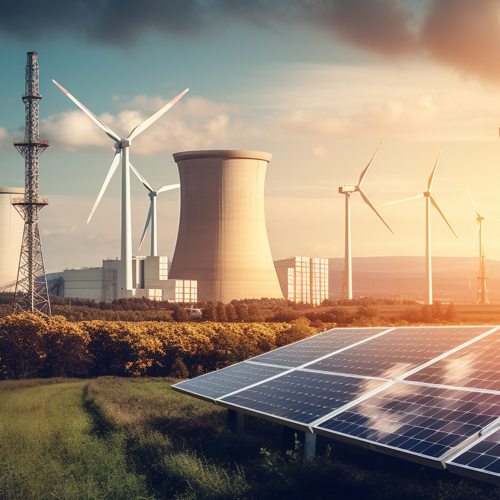
Energy remains a central pillar of the relationship. India's energy needs will continue to grow, while the relationship is broadening well past renewables into LNG supply, strategic reserves, transmission, storage, green hydrogen and potentially civil nuclear cooperation. In January 2026, HPCL and ADNOC Gas signed a 10-year, 0.5 million-tonne LNG agreement, and the two governments agreed to expand civil nuclear cooperation, including through Small Modular Reactors.
India's non-fossil capacity had reached approximately 300.5 GW by 31 July 2026—over 60% of its 500 GW 2030 target—and the remaining gap requires investment in grid infrastructure, storage, green hydrogen and industrial decarbonisation as much as generation itself.
For UAE investors, the particularly relevant opportunities may sit not only in generation but in the enabling systems around India’s transition: storage, grid and transmission infrastructure, green hydrogen and sustainable fuels, alongside scalable renewable-generation platforms. India’s scale means that successful operators can build significant platforms rather than individual projects.
For Indian companies, UAE capital can provide financing strength, project-development experience and international energy-sector capability.
The commercial analysis will need to remain rigorous. Project returns can depend on factors such as land availability, grid connection, offtake arrangements, tariff structures, counterparty quality, construction risk and regulatory certainty. Thematic conviction is valuable, but it needs to be supported by disciplined underwriting, appropriate governance rights and careful risk allocation.
6. Financial, digital and logistics infrastructure: the corridor’s new rails
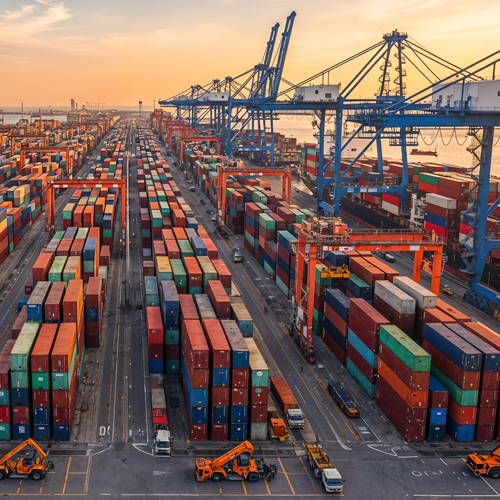
Investment corridors become more durable when the financial, payment, digital and logistics systems around them deepen. On this measure, the India–UAE corridor has changed materially in only a few years. The 2023 INR–AED Local Currency Settlement framework allows eligible cross-border transactions to be invoiced and settled in the two domestic currencies, with the objective to reduce transaction costs and settlement times. The broader framework also contemplates deeper interoperability between payment and messaging systems.
Financial-sector connectivity is also taking physical form. ADIA commenced India operations through its GIFT City subsidiary in October 2024. In January 2026, the two governments welcomed the establishment of First Abu Dhabi Bank and DP World operations in GIFT City, with FAB’s branch intended to connect Indian corporates and investors with its GCC and MENA network.
The technology relationship is moving beyond payments. India and the UAE have identified digital infrastructure, data centres and artificial intelligence as areas for bilateral collaboration. In January 2026, C-DAC and G42 agreed in principle to collaborate on a supercomputing cluster in India under the India AI Mission; by May 2026, that initiative had progressed to a term sheet for an 8-exaflop supercomputing cluster.
On the physical side, Bharat Mart, the Virtual Trade Corridor, Bharat-Africa Setu and the India–UAE IMEC framework point in the same direction. Bharat Mart is intended to connect Indian MSMEs from Jebel Ali into markets across the Middle East, Africa and Eurasia; the Virtual Trade Corridor now digitally connects customs and port authorities; and IMEC provides a longer-term framework for logistics connectivity towards Europe.
Taken together investment protection, payment settlement, financial-centre connectivity, digital infrastructure and logistics are being developed in parallel. That is what begins to turn a strong bilateral relationship into an investible corridor. As these links deepen, GIFT City, ADGM and DIFC may increasingly serve complementary roles in India–UAE capital flows and investment structures. The appropriate route will depend on regulatory, tax and commercial considerations, but the larger point is that the financial infrastructure connecting the two markets is becoming more institutionalised.
7. What this means for UAE investors

UAE investors should approach India as a long-term strategic market, while remaining disciplined in how they enter and deploy capital.
- Set a clear India objective. Identify whether the investment thesis is yield, growth, strategic market access, supply-chain security, technology capability, access to wider markets or a combination of these factors.
- Identify where UAE capabilities create an edge. Capital alone may not differentiate an investor.Logistics capability, energy expertise, regional distribution, government relationships and access to Middle Eastern and African markets may provide a more meaningful advantage.
- Choose the route to market carefully. Direct investments, joint ventures, fund commitments, co-investments and listed instruments offer different levels of control, execution risk and liquidity.
- Build local operating capability. India’s scale is matched by its complexity. Sector knowledge, local relationships and state-level understanding can be decisive.
- Design for operational resilience. Assess whether the investment has sufficient optionality across suppliers, logistics, energy inputs, financing and end-markets, rather than analysing each exposure in isolation.
- Prioritise governance early. Minority protections, reserved matters, information rights, exit rights,transfer restrictions and dispute mechanisms should be addressed from the outset.
- Plan for the second investment, not only the first. If India is intended to become a strategic market, consider which local teams, partnerships, governance structures and regulatory capabilities can be reused across future investments.
- Integrate legal and regulatory planning into execution. Foreign investment rules, sectoral restrictions, competition approvals, tax, exchange-control requirements and contractual enforceability can materially affect returns and timing.
8. The long-term opportunity

The UAE–India corridor matters now not because either market has suddenly discovered the other, but because a relationship built over decades is acquiring significantly more sophisticated infrastructure around it. CEPA, investment protection, local-currency settlement, financial-centre connectivity, digital infrastructure and increasingly integrated trade and logistics systems are reducing friction and widening what the corridor can support.
Recent geopolitical and supply-chain disruption reinforces the commercial value of this architecture, but the opportunity is broader than diversification from any one risk. it is the ability to construct businesses and investment platforms with multiple financing, production, sourcing and distribution options.
For UAE capital, India is therefore more than a large emerging-market allocation. It can form one side of a wider operating platform in which Indian scale, production and technology are combined with UAE capital, energy and logistics capabilities and access to third markets. For India, the UAE is correspondingly more than a source of funding: it is a strategic commercial and financial gateway.
That will require patience as well as ambition. Not every announced initiative will become an operating platform, and not every sector will develop at the same pace. But the direction is increasingly clear. India and the UAE are moving from participation in each other’s growth towards building a shared architecture for growth beyond their own markets.
The next phase of the UAE–India corridor will not be defined simply by how much UAE capital enters India. It will increasingly be defined by what the two economies build together: investment platforms, supply chains, energy systems, digital infrastructure and routes to third markets. For investors able to combine patient capital with operating capability, repeatable India expertise and long-term partnerships, that shift creates a substantially larger opportunity than a conventional emerging-market allocation.